Published · Updated
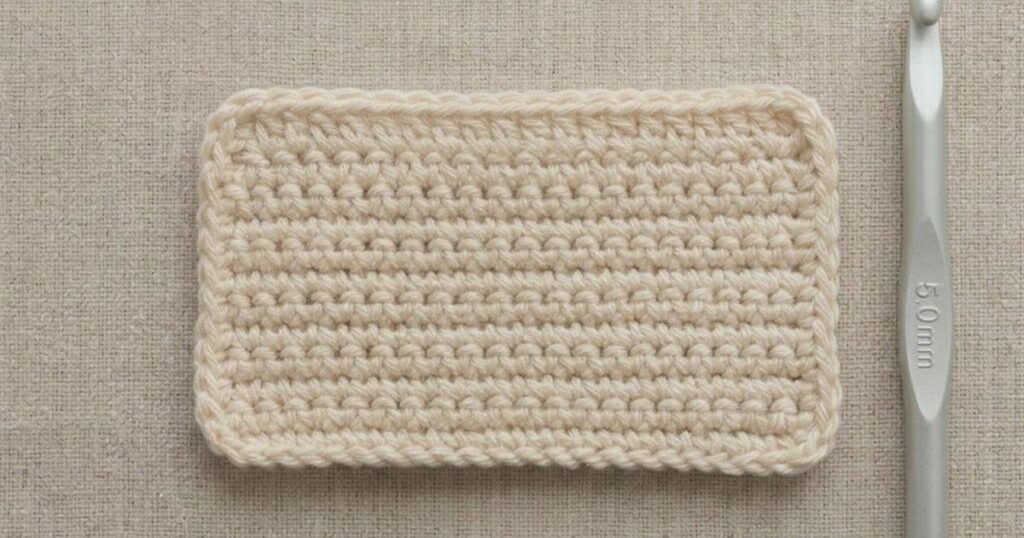
Single crochet (abbreviated sc) is the shortest of the basic stitches and the one used most often in amigurumi. It makes a dense, firm fabric, which is exactly what you want when you are stuffing a toy. Learn it once and you will use it in almost every project you make.
What You Need
- A 5 mm (US H-8) hook and smooth worsted-weight yarn in a light color.
- Some practice with the slip knot and the chain stitch, since you will start from a foundation chain.
- A stitch marker, which is optional but helpful for marking the first stitch of a row.
A Note on Terms
This tutorial uses US crochet terms. In UK terms, the stitch we call single crochet is called double crochet, so always check which terms a pattern uses before you begin.
Step by Step
- Make a slip knot and chain 21. Twenty of these chains will hold your stitches, and the extra chain gives you a place to start.
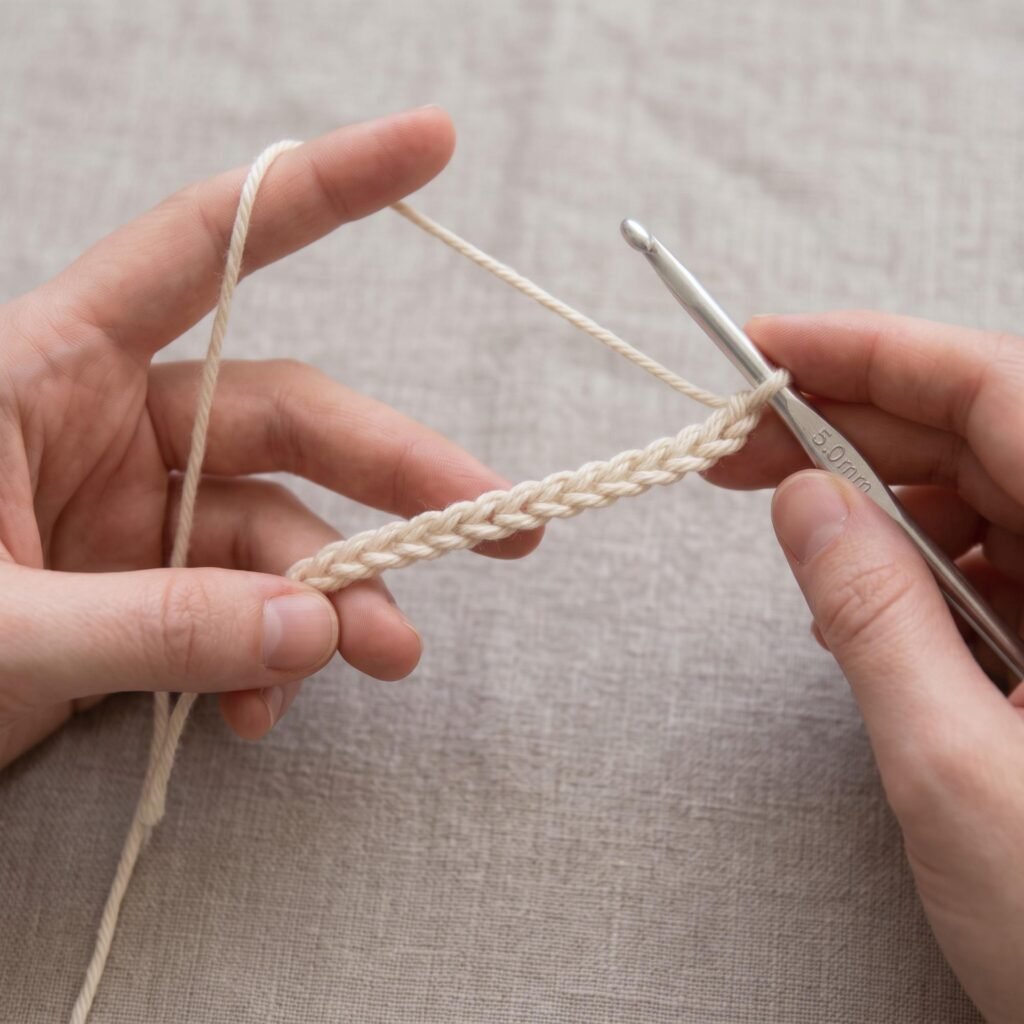
Step 1: the foundation chain. - Skip the chain closest to the hook, and put the hook into the second chain from the hook. Go under the top loop of the chain and the bump at the back.
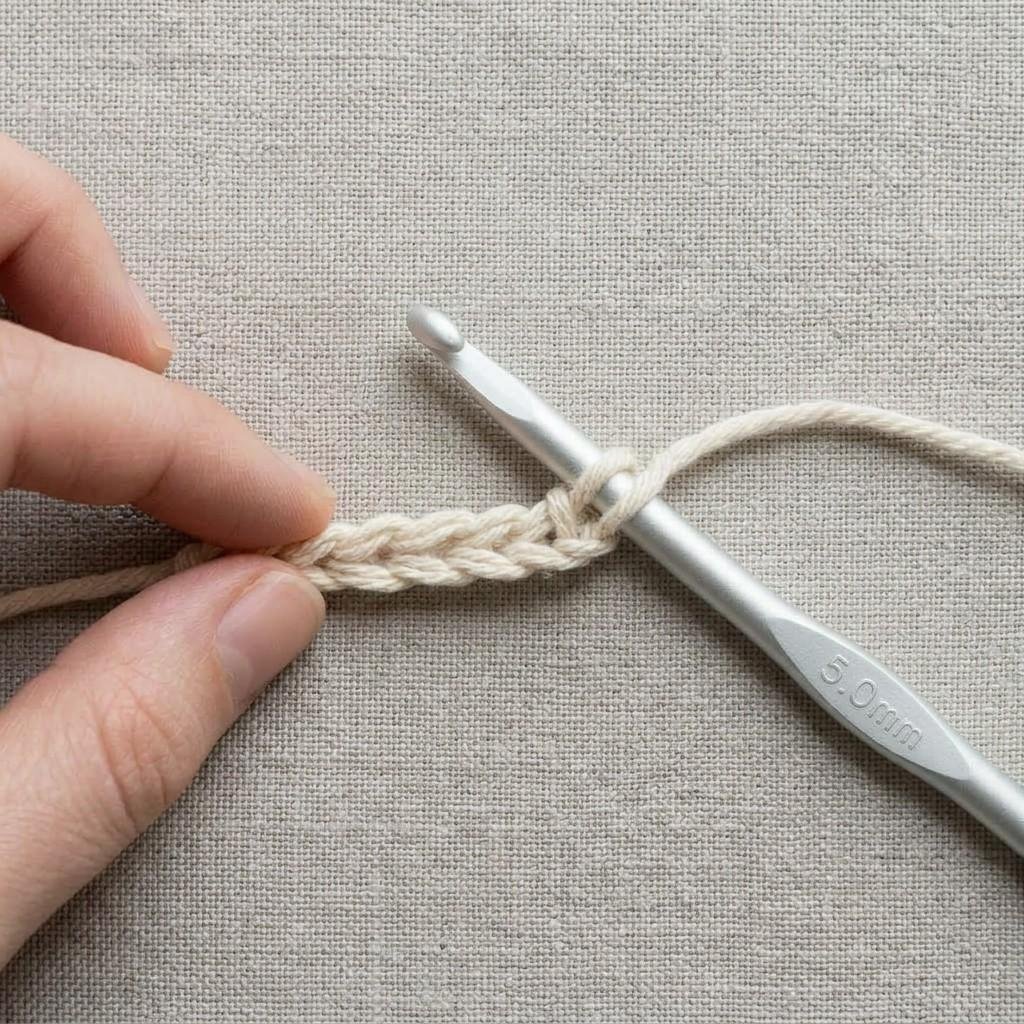
Step 2: the hook goes in the second chain. - Yarn over and pull up a loop through the chain. You now have two loops on the hook.
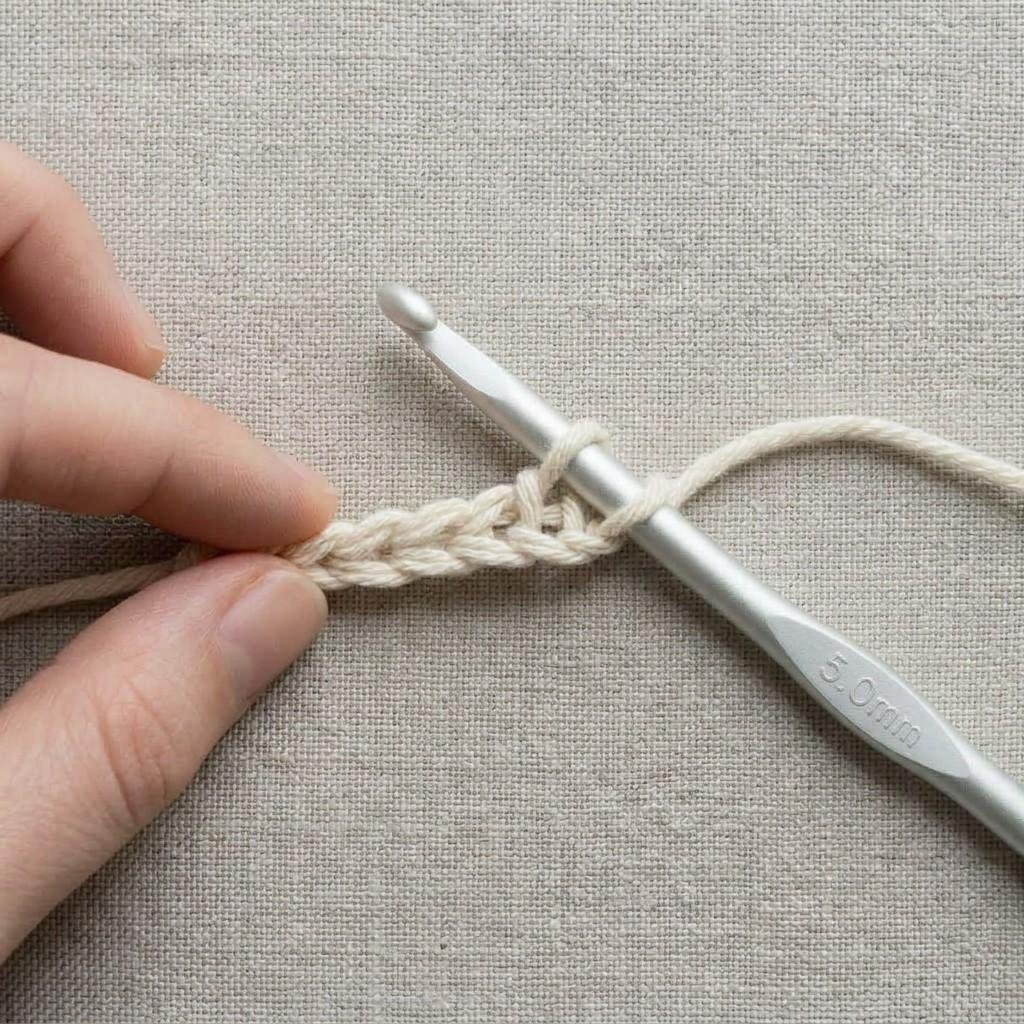
Step 3: pull up a loop. - Yarn over again and pull through both loops on the hook. One single crochet is finished, and one loop remains on the hook.
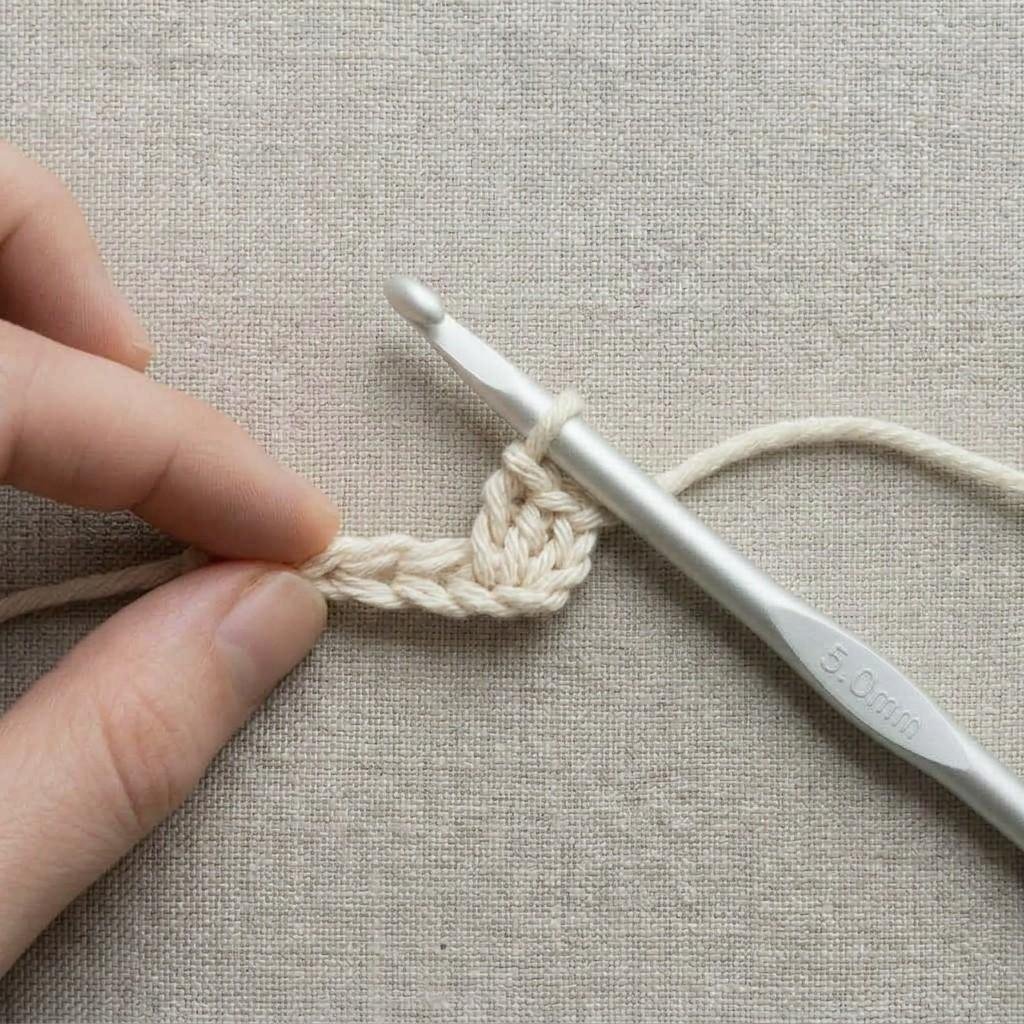
Step 4: the first stitch is finished. - Put the hook into the next chain, and repeat steps 3 and 4 in each chain across. When you reach the end, you should have 20 single crochet stitches.
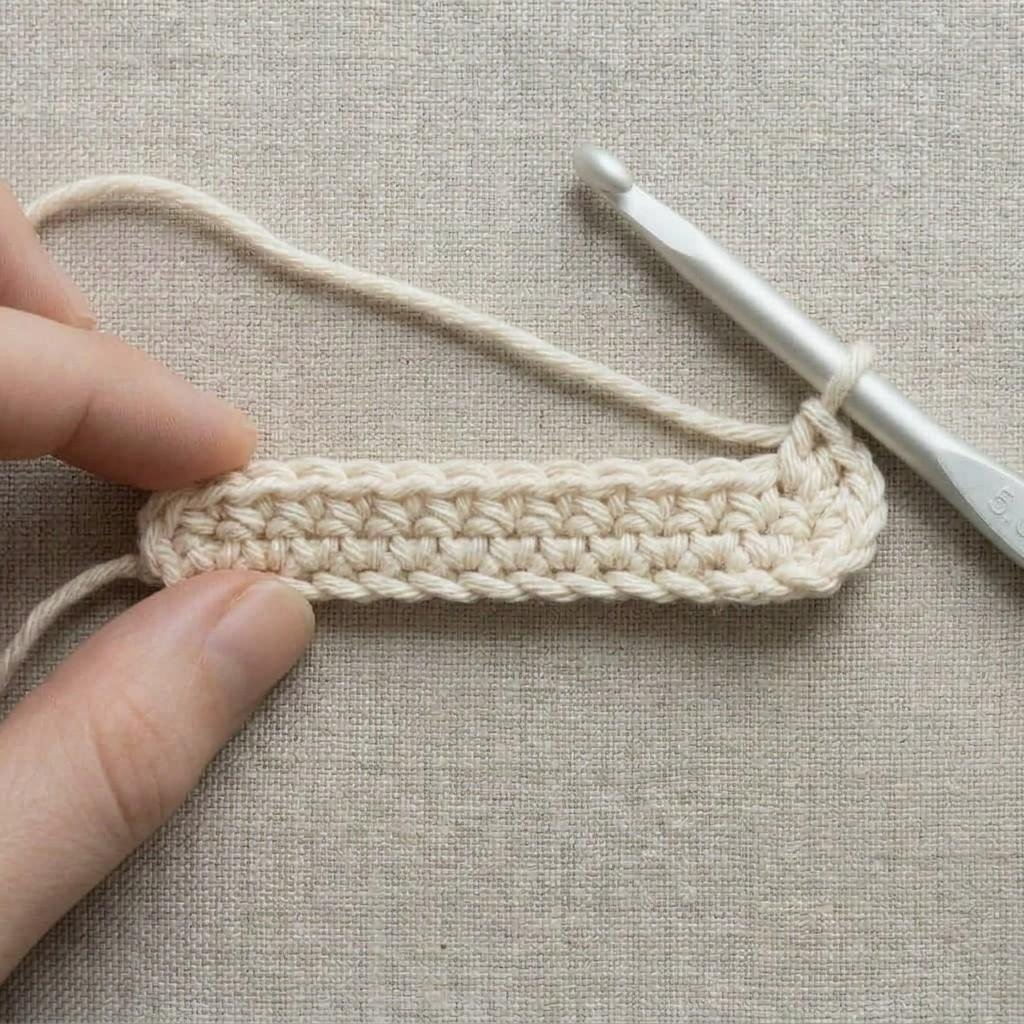
Step 5: a finished row. - To start the next row, chain 1 and turn your work, like turning the page of a book. The chain gives your yarn some height.
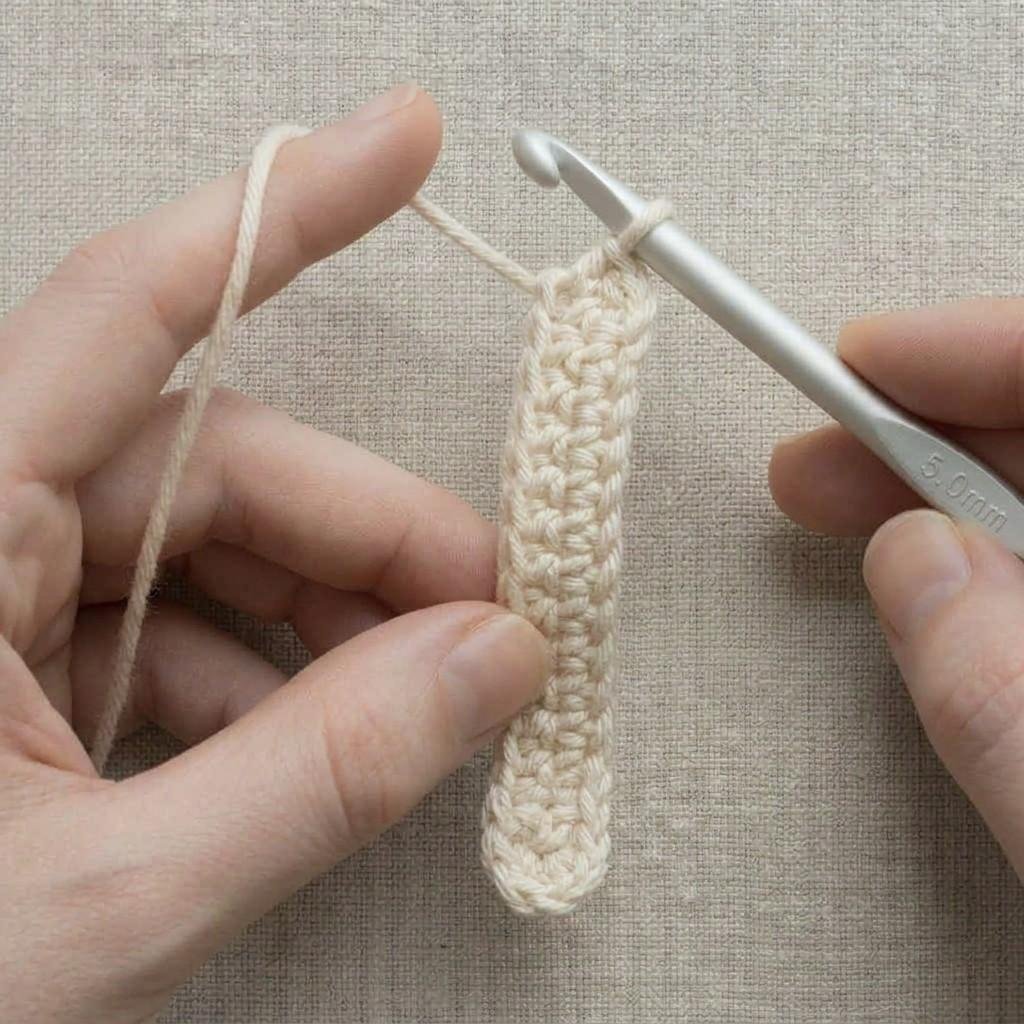
Step 6: chain 1 and turn. - Find the first stitch of the row below. It looks like a small V at the top of the first single crochet. Do not work into the turning chain. Put the hook under both loops of the V.
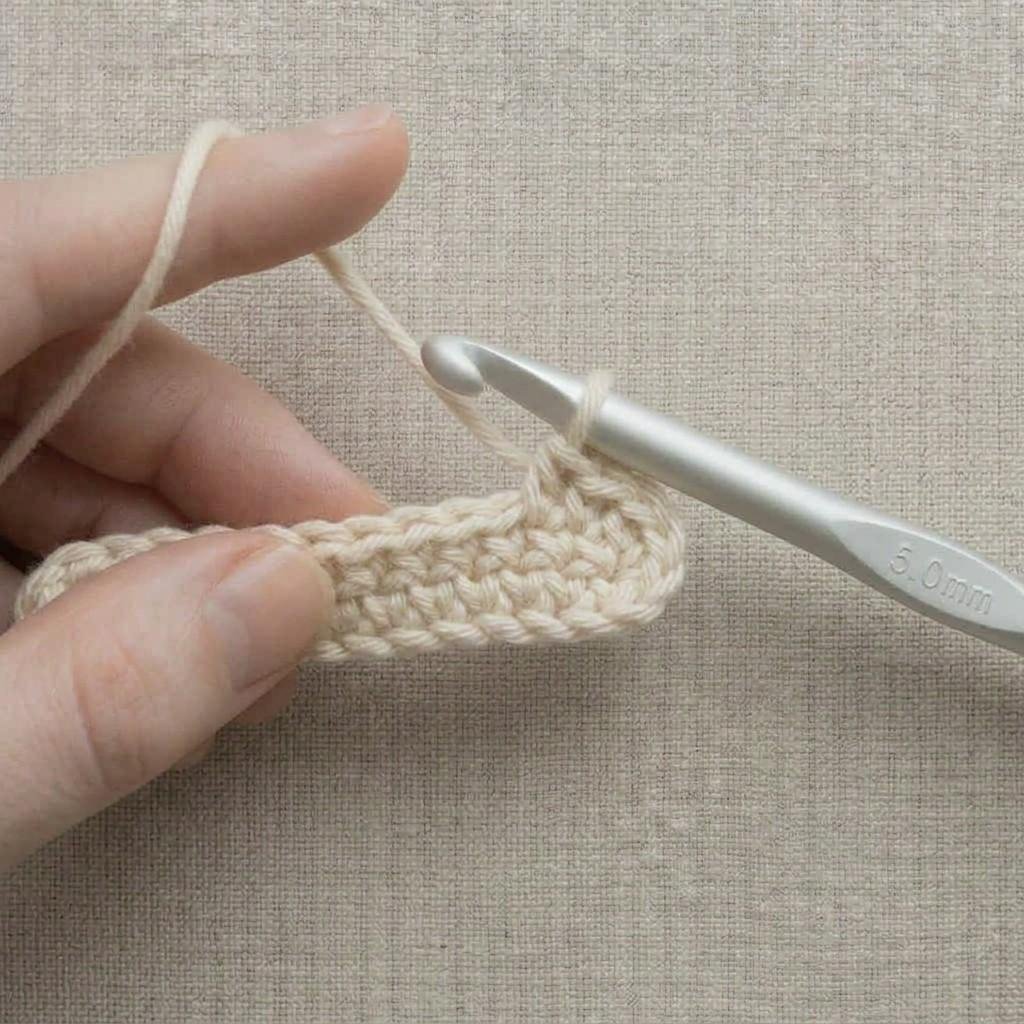
Step 7: the first stitch of the next row. - Yarn over, pull up a loop, yarn over, and pull through both loops, as you did before. Repeat in each stitch across, putting your last stitch in the top of the last stitch of the row below.
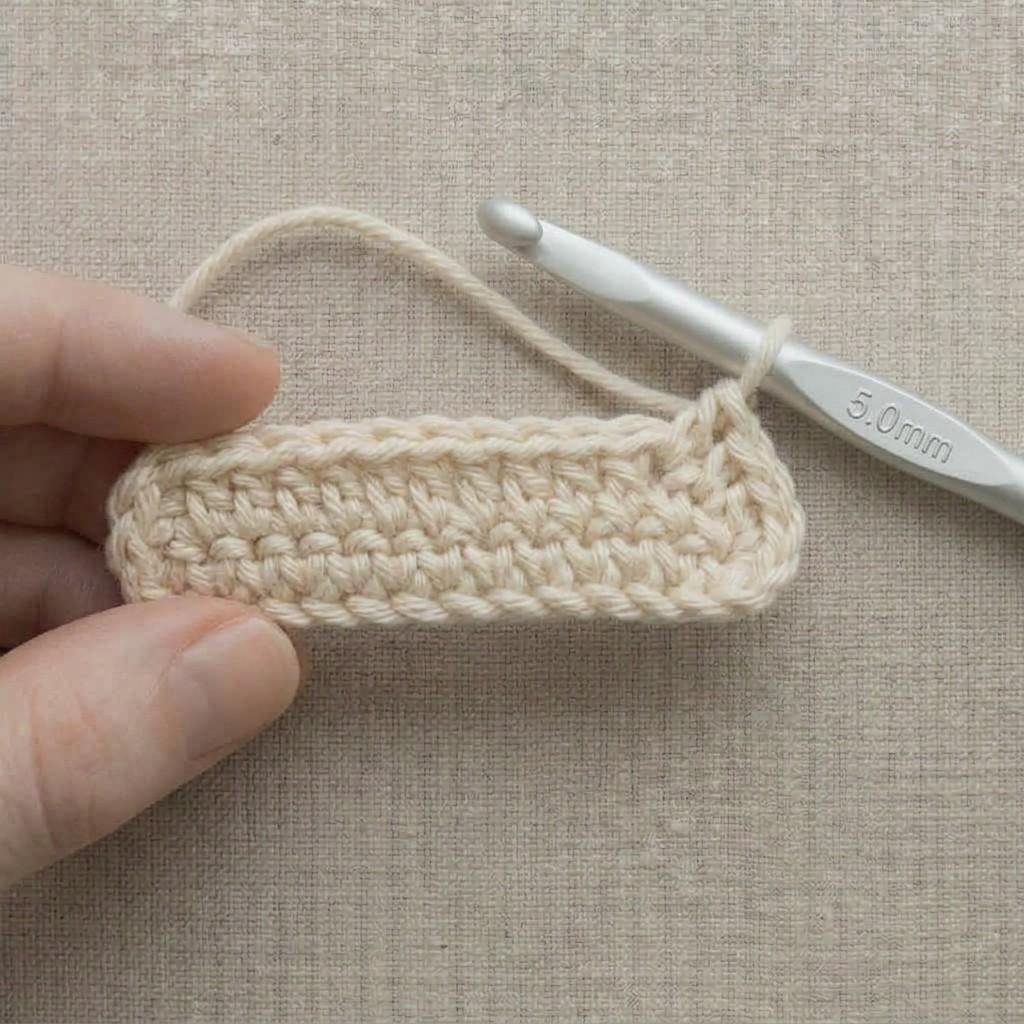
Step 8: two finished rows.
Some patterns skip the turning chain in single crochet and simply turn and continue. Always follow the instructions in your pattern. The first-row steps above assume the turning chain is included.
Counting Your Stitches
Count your stitches at the end of every row. It is a very useful habit for keeping straight edges. In the swatch above, every row should contain 20 stitches. If the count is off, find where the row went wrong before you add another row, because the mistake will only get bigger.
Common Mistakes and How to Fix Them
- The piece gets wider every row. You are probably working into the turning chain as if it were a stitch. Skip it, and begin in the first V.
- The piece gets narrower every row. You are probably missing the last stitch of the row. Put your final stitch into the top of the last stitch of the row below.
- The fabric is stiff and hard to work. Loosen your grip, or try a hook one size larger.
- There are gaps between stitches. Make sure the hook goes under both loops of the V, and snug the yarn as you pull up each loop.
- The yarn splits. Use a smooth, tightly twisted yarn while you learn the stitch.
Tips for Left-Handers
Hold the hook in your left hand and use your right hand to hold the work and the yarn. All of the movements are mirrored. Right-handed crocheters work each row from right to left, while left-handed crocheters usually work from left to right. The stitch counts in a pattern stay the same in either direction. If you use a right-handed video, try watching it in a mirror.
Single Crochet in Amigurumi
Amigurumi patterns often work single crochet in a spiral, without turning and without a turning chain. Because the stuffing will press against the fabric, many crocheters make their stitches a little tighter than they would for a flat piece, so that no stuffing shows through. Most round projects begin with a magic ring.
How to Read Your Stitches
Looking closely at your work is the quickest way to improve. Each single crochet shows a V on the front of the fabric, and the Vs should line up in neat, even columns. If a V looks stretched and tall, your loop was too loose when you finished the stitch. If it looks squashed and hard to enter on the next row, you pulled too tightly. Do not worry about making every stitch identical on your first swatch. Instead, look for patterns in your own tension, and change one thing at a time, such as how firmly you hold the yarn.
Practice Swatch
Work a swatch of 20 stitches and 20 rows, counting at the end of every row. When you finish, measure the width at the top and at the bottom. If they match, you have found your rhythm. If they do not, go back to the mistakes above and check which one sounds like your swatch. Keep the swatch, because it is a handy reference for how your tension looks with a particular hook and yarn.
Frequently Asked Questions
What does sc stand for?
Single crochet. In US terms, it is the shortest basic stitch.
Why are the edges of my swatch wavy?
Wavy edges usually mean you are adding or missing stitches at the ends of rows. Count each row to find the problem.
Do I always chain one before turning?
Many patterns do, but some do not. Follow your pattern, and use the same method for every row of a piece.
How can I make my stitches more even?
Use the same hook and the same yarn hold throughout, and slow down until the stitches look consistent. Evenness tends to improve with practice.
What to Learn Next
When single crochet feels comfortable, learn the magic ring so you can begin round projects.
The beginner series
- 1. Slip Knot
- 2. Chain Stitch
- 3. Single Crochet (this page)
- 4. Magic Ring
- 5. Half Double Crochet
Step images in this tutorial were created with AI to show each stitch.